Урок для новичков
Содержание:
- Основы работы в векторном редакторе Inkscape[]
- Extensions
- Группировка
- Bug fixes
- Known problems
- Import/Export
- Работа с документами
- Graphical Editor / User Interface
- Notable bugfixes
- Crash fixes
- Release highlights
- Возможности Inkscape
- Перемещение, масштабирование, поворот
- Notable bugfixes
- Improvements
- Основные приёмы
Основы работы в векторном редакторе Inkscape[]
Что такое векторный редактор Inkscape?
Inkscape — это бесплатный редактор растровой и векторной графики, который очень незаменим для создания художественных и технических иллюстраций. Графический редактор Inkscape предназначен для создания и редактирования графики SVG.
Чем векторная графика отличается от растровой?
Векторная графика — это цифровые изображения,которые выстраиваются из готовых геометрических форм, способных достигать, как правило, любой величины и окрашиваться в любой цвет (но, как правило, общее количество одновременно используемых оттенков в таких картинках обычно небольшое). Главное отличие растровой графики от векторной — в принципе построения изображения. В растровом изображении картинка состоит из пикселей — единичных точек, в векторном — представляет собой готовую фигуру.
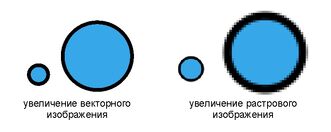
Следует отметить, что векторные картинки без проблем трансформируются в растровые. Фактически в момент отображения на экране они временно превращаются в них — обладая конкретной величиной и разрешением, выражаемыми в пикселях. Но их «растровость» вполне можно зафиксировать, сохранив картинки в отдельный файл соответствующего типа.В свою очередь, трансформировать растровую графику в векторную гораздо сложнее.
Основы программы Inkscape
-
Главное меню (Главное меню в верхней части окна) — Главное меню Inkscape содержит основные функции работы с программой: работа с файлами, функции редактирования и просмотра, функции редактора работы с текстом, фильтрами, объектами и контурами, дополнения и справочную информацию.
- Панель элементов управления Inkscape —В зависимости от того, какой инструмент выбран в окне инструментов Inkscape, изменяется вид контекстной панели Inkscape. В контекстной панели отображаются настройки и параметры активного инструмента. В зависимости от ситуации изменение этих параметров может сразу повлиять на выбранный объект, а в некоторых случаях изменения параметров вступят в силу только при создании нового объекта или повлияют на существующие и новые объекты.
- Разметка, линейки, направляющие и сетки — линейка разметки расположена вверху и слева холста inkscape. Деления линейки разметки определяют расстояния в некоторых единицах, по умолчанию в пикселях. Изменить настройку единиц измерения можно в свойствах документа в меню «файл» — «Свойства документа».
- Окно инструментов — это основной элемент для работы в векторном редакторе Inkscape. Окно инструментов inkscape содержит основной набор графических инструментов для создания и редактирования фигур. В окне инструментов inkscape присутствуют инструменты для работы с геометрическими фигурами, а также свободной трансформации фигур и линий, инструменты для работы с текстом и цветом (заливка и градиенты).
- Палитра — это быстрый доступ к цветам, она же позволяет назначить цвета к фигурам Inkscape.
- Холст — не смотря на то, что границы отображаемого на холсте «листа» определяют границы изображения для печати или сохранения, при рисовании размер «листа» вовсе не ограничивают область изображения. Вы даже можете сделать границы «страницы» и показанные на рисунке выше тени этих границ невидимыми. Настроить видимость границ страницы можно в свойствах документа.
- Строка состояния — отображает (слева направо): цвет заливки и обводки объекта, возможность быстрой работы со слоями и переключения между ними, область сообщений, индикатор координат указателя мыши, управление масштабом.
- Контекстная панель управления — панель параметров прилипания позволяет легко настроить параметры прилипания объекта inkscape. Функции этой панели удобны для правильного и точного размещения объектов. Панель параметров прилипания расположена вертикально по правому краю рабочей области окна.
- Панель инструментов — содержит значки-иконки, которые вызывают определенные команды редактора. Эти команды также доступны в главном меню или по комбинации клавиш. Панель инструментов предназначена для более легкого доступа к наиболее используемым функциям редактора.
Extensions
New and improved extensions
-
The new
Generate from Path > Voronoi Pattern
extension creates a random pattern of Voronoi cells. The pattern will be accessible from the Fill and Stroke dialog. The pattern can be made to be smooth at the edges by choosing a positive border, or sparse at the edges by using a negative border. -
The new
Render > Wireframe Sphere
extension draws the globe as a collection of ellipses representing a sphere’s latitude and longitude lines. The number of lines is adjustable, as well as the tilt and rotation. There is an option to hide the lines at the back of the sphere. -
The new
Render > Barcode — Datamatrix
extension renders a DataMatrix 2D barcode, as specified in BS ISO/IEC 16022:2006. The number of rows and columns of the DataMatrix is adjustable. If more data is given than can be contained in one DataMatrix, more than one DataMatrix will be produced. -
The new
Modify Path > Pixelsnap
extension aligns rectangles and paths to pixel boundaries, to create sharp web and digital graphics. -
The new
Color > Black and White
extension turns the selection colors into black and white. -
The new
Text > Split Text
extension splits texts into different lines, words or letters. -
The new
Web > Slicer
extensions to slice web layouts into multiple images and help the HTML+CSS creation. -
Images > Extract Image
: all relative paths (or filenames without path) are now relative to the user’s home directory. -
Visualize Path > Measure Path
: new option to calculate area.
Группировка
Несколько объектов могут быть объединены в группу. При перемещении и трансформации группа ведёт себя также как и обычный объект. Как следует из иллюстрации ниже, три объекта слева независимы, в то время как правые объекты сгруппированы. Попробуйте перетащить сгруппированные объекты.
Для создания группы нужно выбрать один или более объектов и нажать Ctrl+G. Для разгруппировки нужно нажать Ctrl+U предварительно выбрав группу. Эти действия также доступны с помощью правого кликаи меню Объектв панели меню. Сами по себе группы могут быть сгруппированы как одиночные объекты. Подобная поэтапная группировка может быть сколько угодно сложной. При этом следует помнить, что Ctrl+U разгруппирует только последнюю группировку. Нужно нажать Ctrl+U несколько раз, если хотите полностью разгруппировать сложносгруппированные группы (либо использовать Расширения⇒Расстановка⇒Разгруппировать до конца (Deep Ungroup)).
Очень удобно то, что не нужно разбивать группу для редактирования отдельных объектов. Выполнив Ctrl+клик по объекту, Вы его выберете и сможете редактировать. Таким же образом работает комбинация Shift+Ctrl+click, позволяющая редактировать несколько объектов независимо от группы.
Для входа в группу, нужно навести курсор на неё и нажать двойной клик, при этом можно редактировать каждый объект в группе без разгруппировки. Для выхода из группы нажмите двойной клик на пустой области холста.
Попробуйте трансформировать или переместить отдельные объекты из предыдущего примера (правая верхняя картинка) без разгруппировки, затем выберите всю группу обычным образом и убедитесь, что объекты остались сгруппированными.
Bug fixes
General
-
Copy-Paste:
- A long-standing, very annoying bug where, when copying an object to the clipboard while also running certain other programs on Linux desktops (mainly clipboard managers), caused multiple export extension dialogs to open, has been fixed, so you can now again use your favorite clipboard manager while also using Inkscape (Commit fe7c68, Bug #575)
- When copy-pasting some items along with their originals/frames/paths (clones, text-on-path, text-in-a-shape, linked offsets), they are no longer displaced in relation to the pasted original (Commit b93f21, Bug #853)
- Stroke to Path: Converting an object’s stroke to a path no longer makes its clones vanish (Bug #1120)
- Performance: Improved rendering performance when zooming through multiple zoom levels (Commit 28e21e)
- CSS: CSS classes that start with a letter that isn’t part of the ASCII set are no longer ignored (Bug #1094)
- Cleanup: An outdated link that pointed to a potentially offensive website now has been removed from a branding document (Commit 88efa4)
- User interface: Random actions should no longer cause sudden scaling of the canvas (Commit 49fc36)
- Markers: When adding a marker to a line, it can now be removed with a single Undo action again (not two) (Commit 179fe9, Bug #2130)
macOS
- Performance: Packaging has been updated for macOS, which removes a performance regression in Inkscape 1.0.1 (Commit 643286)
- Icons: File system icons look correct again now (Commit 643286, Bug #1893)
- Export: PDF export no longer produces unprintable PDF files (Bug #827, Commit 643286)
Circle Tool
- Arcs from Inkscape files created with versions older than 1.0 are no longer rendered as slices (Bug #1900)
- When dragging on an ellipse’s handles inside the ellipse to create an arc, Inkscape no longer renders it as a closed slice (Commit def938)
Eraser Tool
A long-standing issue with the Eraser tool painting red lines instead of erasing as soon as the user has interacted with a menu or dialog or another user interface element has been fixed (Bug #2068, Commit 2057bf)
Selectors and CSS dialog
In addition to multiple crash fixes (see below), the dialog now correctly recognizes style tags inside the documents defs section (Commit 12f4d6, Bug #905)
Text
- A series of related bugs with text objects was fixed (MR #2434).
All of the affected actions required a text object to behave like a path, but it behaved like a group, and the action failed. This series of bugs mostly affected new users who were following tutorials which did not work as expected.
Specifically, the following actions now work again:- A text object unioned with itself results in a single path again.
- Text objects can again be used with other objects in all Boolean operations.
- Text objects can again be inset and outset.
- Text objects can again be used to create a Dynamic Offset or a Linked Offset.
- The font preview sample now contains the correct currency symbols €¢ (instead of \342\202\254\302\242). One needs to reset the preferences to see the updated font sample text (MR #2547).
- Custom font folders are found now and taken into account, even when the installed Pango version is newer than 1.44.7 (Bug #1977, Commit 1771fa)
Known problems
- Some window managers, notably Sawfish, interact badly with the «Autoraise Dialogs» feature and do not display dialog window decorations, making it difficult to use them. For the present, users of such window managers can turn this option off in the Dialogs menu. This will be fixed in a future release.
- The Autoraise Dialogs option has no effect on Windows.
- When using Copy and Paste (or Paste style) commands, you cannot copy gradients or arrowheads from one document to another. Workaround: use the XML editor to copy the content of the <defs> element from the source document to the target document, then copying gradients and arrowheads will work.
- Pasting text directly into a text object on the canvas does not work. Workaround: open the Text dialog (Shift+Ctrl+T) and paste into the text editing area there, then click Apply.
- The RGBA field in the Fill and Stroke dialog may sometimes lose its value. We are investigating the cause.
Import/Export
Improved bitmap image import
Bitmaps are now always embedded when pixel data is pasted or dragged into Inkscape’s window (for example when copying parts of an image from GIMP). Files with automatically generated names like «inkscape_pasted_image_…» are no longer created in the document directory. When importing or opening bitmap images, a dialog is displayed that asks whether you want to link the image or embed it.
New LaTeX export for PDF/EPS/PS
Similar to GNUPlot’s `epslatex’ output terminal and Xfig’s combined PDF/LaTeX output, Inkscape can now export graphics to PDF with an accompanying LaTeX file that overlays the text over the PDF when inputted in LaTeX. The image’s text is typeset by LaTeX, so for example mathematical expressions are rendered correctly, and all text will be in the font and style of the LaTeX document (even when changing the document’s font afterwards).
(the following description assumes export to PDF, but will work the same for EPS and PS)
Two files will be created: a PDF file containing all graphics, without text; and a LaTeX file with the same name (with extension «.pdf_tex»), containing all text, and code to include the PDF and overlay the text. To include the exported image in LaTeX, one writes
 \begin{figure}
   \centering
   \def\svgwidth{\columnwidth} % sets the image width, this is optional
   \input{image.pdf_tex}
 \end{figure}
From the GUI
When exporting to PDF/EPS/PS from Inkscape’s GUI, the usual dialog pops up after selecting to which PDF/EPS/PS file to export to. In this dialog, you can find the PDF/EPS/PS+LaTeX option.
Command line option
When exporting to PDF/EPS/PS from the command line, adding —export-latex will turn the LaTeX export on. For example
inkscape image.svg -z -D --export-pdf=image.pdf --export-latex
Работа с документами
Для создания нового пустого документа используйте Файл⇒Создать либо Ctrl+N. Для создания нового документа из шаблонов Inkscape используйтеФайл⇒Создать по шаблону… или Ctrl+Alt+N.
Чтобы открыть документ SVG, используйте Файл⇒Открыть (Ctrl+O). Чтобы сохранитьФайл⇒Сохранить (Ctrl+S),или Файл⇒Сохранить как… (Shift+Ctrl+S) чтобы сохранить под новым именем. (Хотя в Inkscape есть функция автосохранения, всё же стоит сохранять документ как можно чаще.)
Inkscape использует формат SVG (Scalable Vector Graphics — Масштабируемая векторная графика) для своих файлов. SVG является открытым стандартом и широко используется в графических пакетах. Формат SVG использует язык разметки XML, поэтому файлы в этом формате могут редактироваться любым текстовым или XML-редактором (отдельно от Inkscape). Помимо SVG, в Inkscape можно работать и с другими форматами. Перечень поддерживаемых форматов файлов можно найти в диалоговых окнах Сохранить и Импортировать.
Для каждого документа Inkscape открывает новое окно. Вы можете переключаться между ними с помощю менеджера окон (например, Alt+Tab), либо с помощью сочетания клавиш Inkscape — Ctrl+Tab циклически переключая документы. Для практики попробуйте создать несколько новых документов и переключайтесь между ними. Примечание: Inkscape относится к этим окнам как к вкладкам в браузере, это значит, что Ctrl+Tab работает только для документов, запущенных в одном процессе. Если вы откроете несколько документов через файловый менеджер или запустите несколько копий Inkscape, то переключение работать не будет.
Graphical Editor / User Interface
Programs which provide a graphical user interface include Inkscape extensions, which either come with Inkscape, or , as well as external or standalone programs.
Inkscape Extensions
JessyInk is an Inkscape extension, which as of version 0.91, comes installed with Inkscape. It creates a slideshow type of animation for presentations, to be viewed in web browsers, by means of embedding JavaScript in the SVG file. Their wiki contains tutorials and other documentation, and there is some info in the Inkscape manual, as well.
Sozi is a presentation application which produces translations, zooms and rotations to be viewed in web browsers, by means of embedding JavaScript in the SVG file. It’s editor started its life as an Inkscape extension (which has to be installed). However, to allow for a more flexible and user-friendly interface, Sozi developers have decided to make it a standalone program. At some point in the near future, the Sozi extension will no longer work with Inkscape, and users will need to install the standalone version. (The Sozi extension does still work in Inkscape version 0.91, but that may be the last version of Inkscape which supports Sozi as an extension.) There is a series of tutorials about the use of the extension on their website. As the standalone version is a lot more intuitive to use, the not-yet-written documentation shouldn’t be an obstacle to using it.
XIA can be installed either as an extension or a standalone program. It creates HTML5 interactive images, which consist of interactive webpages (such as for presentations), that can even contain simple games. Interactivity includes mouse click, hover, and drag and drop. On their website can be found documentation in the form of a PDF file, an instructional video, and several example files, showing each use case which XIA can create.
Websites and Web Services
AniGen is a browser-based, Free and Open Source SVG animation editor. Development is focused on Chrome, but it should work ok in Firefox, too. User interface is a bit hard to use at first, but decent results can be achieved with an Inkscape source SVG opened directly for editing.
Standalone Programs
Xia and Sozi
Both programs (see above) are also available as standalone versions. For Sozi, this is intended as a replacement for the extension, which is no longer being developed.
GIMP is a free/open source, 2D graphics editor, which can create, import and export, both raster and vector images. (It’s primarily for raster graphics, but has some minimal vector features.) It has a relatively simple and easy to use GIF animation feature, with at least 3 tutorials on their website. You can find them by looking through their Documentation page. Basically, images drawn with Inkscape need to be exported to PNG, before they are imported into GIMP (hint: in GIMP, use Import as Layers). Note that there are MANY other programs which can create GIF animations — just search!
Tupi is a free/open source program which can animate both raster and vector images. Their Documentation page provides links to their manual, tutorials, examples, faq, and more.
Synfig Studio is a free/open source 2D animation program, which can import and utilize SVG images. Starting with version 0.91, Inkscape can even export the native Synfig format, SIF. There are both a manual and tutorials in their wiki.
enve is a relatively young free/libre 2D animation software with support for both importing SVG files and creating animated SVG documents.
Blender is a free/open source 3D animation suite, which can import SVG images. There are both manual and tutorials on their Support page.
Notable bugfixes
- As of Windows 10 (version 1809), fonts are installed into a new user-specific folder by default. Inkscape can now find and display those fonts, in your fonts drop down list. (Bug #50)
- The default Perl interpreter executable on Windows was changed from «perl.exe» to «wperl.exe» which should usually avoid flashing a console window. (Bug #66)
- Inset / Outset and calligraphy tool dots now honor document units (Commits #8b15224a and #53183233)
- Fix stroke to path for dashed paths with round caps (Commit #cb555bdc)
- Limit size of font preview (Commit #06cb5e15)
- Files with spaces in names are now opened by the Inkscape snap (Commit #1a1d78ad)
- Default preferences value for ‘Rendering tile multiplier’ set to a value that yields better performance on modern hardware (note: only applies if you reset your preferences file or install Inkscape for the first time) (Commit #f8dce91b)
- Remove GCodetools update check (Commit #45b59e76)
- Remove Trace Bitmap dialog if Inkscape is compiled without potrace (Commit #880a88d9)
- Remove spell checking dialog if the necessary spell checker library is not installed (Commit #287c3a7e)
- Fix failing import of certain types of jpg files (usually originating from mobile phones) (Bug #632)
Crash fixes
Fix a crash …
- … when moving a group after deleting a connector from it (Bug #205)
- … on PNG export (Commit #6cf2c8)
- … in Clone Original LPE (Commit #515569e7)
- … in SIOX foreground tracing (Commit #424477f6)
- … when importing / selecting a large PNG image (Commit #72836e91)
- … on undo when the text dialog is open (Commit #40c7e4f8)
- … for connector tool avoidance functionality (flatpak) (Commit #c4d31185)
- … when selecting all with text on path (Commit #1a07842b)
- … when putting text on path with Objects dialog open (Commit #f5a38658)
- … of the paint bucket tool (flatpak) (Commit #cbeb0db7)
- … on Boolean division (flatpak) (Commit #094d2341)
- … when resizing objects (Commit #5095c1b4)
- … when pressing the menu button with Mate desktop (Bug inbox#400)
- … with empty text and arrow / Enter keys (Commit #f29ffcbb, Commit #decb8fcb, Commit #957032e1)
- … when clicking at the end of a text (Commit #8306201a)
- … when rotating an element with snapping enabled (Bug #1584)
- … on closing Inkscape (Commit #94d345e0)
Release highlights
Released on 2015-01-28 .
- Cairo rendering for display and PNG export
- OpenMP multithreading for all filters
- C++ code conversion
- Major improvements in the Text tool
- Measure tool
- Type design features http://libregraphicsworld.org/blog/entry/inkscape-explores-type-design-gets-measure-tool , http://understandingfonts.com/blog/2011/11/typography-extensions-in-inkscape-0-49/
- Symbol library and support for Visio stencils
- Cross platform WMF and EMF import and export
- Improved support for Corel DRAW documents, Visio importer
- Support for real world document and page size units, e.g. millimeters
- Numerous usability improvements
- Native Windows 64-bit build
- Bug fixes (see below)
Возможности Inkscape
- Векторизация растровой графики;
- Интегрированный редактор шрифтов;
- Позволяет устанавливать горячие клавиши;
- Встроенная опция коллективного рисования;
- Возможность применять фильтры и эффекты;
- Функция высококачественной печати проектов;
- Выделение, масштабирование, поворот объектов;
- Регулировка яркости, насыщенности, контрастности;
- Работа с контурами, фигурами, текстом и маркерами;
- Редактирование изображений в сжатом виде в формате gZip;
- Большое количество инструментов для создания векторной графики;
- Различные примеры и уроки по использованию Inkscape на сайте разработчика;
- Импорт файлов в формате JPEG, PNG, TIFF, GIF, BMP, RAS, TGA, WBMP, XBM, XPM, POV, DXF и т.д.
Преимущества
- Поддержка макросов PSTricks;
- Открывает растровые изображения;
- Имеется возможность работы со слоями;
- Создание баннеров и макетов для сайтов;
- Векторный редактор с открытым исходным кодом;
- Удобная статусная строка, настраиваемый размер главного окна;
- Интуитивно понятный многоязычный интерфейс (русский присутствует);
- Использование языков Perl и Python для аналитического задания кривых;
- Новая версия программы Inkscape совместима с Microsoft Windows 10 и Mac OS X;
- Позволяет использовать разные фигуры: прямоугольник, эллипс, звезда, спираль;
- Inkscape реализует экспорт файлов PNG, SVG, CSS, ICO, CUR, PCX, PNM, RAS, TGA, WBMP, WMF, WPG, GGR, ANI, DIA, AI, PDF, JPEG, XPM и пр.
Недостатки
Перемещение, масштабирование, поворот
Наиболее часто используемый инструмент inkscape — это инструмент выделения и трансформации. Это верхний инструмент в боковой панели инструментов, выглядит он как черная стрелка. Инструмент выделения можно активировать с клавиатуры по кнопке F1 или Пробел (самая большая кнопка на клавиатуре). Этим инструментом вы можете выбрать любой объект на холсте. Просто щелкните по нему.
Если объектом является прямоугольник, например, такой как на рисунке справа, то вы увидите восемь маркеров в форме стрелок вокруг объекта. Теперь вы можете:
- Перемещать объект простым перетаскиванием мыши. (Удерживайте Ctrl чтобы ограничить движение по горизонтали и по вертикали).
- Изменять размер объекта, перемещая любую из черных стрелочек. (Удерживайте Ctrl для того чтобы сохранять пропорции).
Теперь еще раз щелкните кнопкой мыши по прямоугольнику. Черные стрелочки по краям изменят форму. Теперь вы можете:
- Поворачивать объект путем перетаскивания угловых маркеров-стрелочек. (Удерживайте Ctrl для ограничения шага угла поворота 15-ю градусами. Перетащите крестик, чтобы изменить положение центра вращения).
- Наклонять объект путем перетаскивания серединных маркеров-стрелочек. (Удерживайте Ctrl, чтобы ограничить шаг угла наклона 15-ю градусами).
Во время работы с инструментом выделения и перемещения, можно использовать числовые поля параметров на верхней контекстной панели инструментов, чтобы задать точные значения для координат (X и Y) и размера (W и H) выделения. Подробнее про работу инструмента выделения и трансформации смотрите в инструкции.
Notable bugfixes
- As of Windows 10 (version 1809), fonts are installed into a new user-specific folder by default. Inkscape can now find and display those fonts, in your fonts drop down list. (Bug #50)
- The default Perl interpreter executable on Windows was changed from «perl.exe» to «wperl.exe» which should usually avoid flashing a console window. (Bug #66)
- Inset / Outset and calligraphy tool dots now honor document units (Commits #8b15224a and #53183233)
- Fix stroke to path for dashed paths with round caps (Commit #cb555bdc)
- Limit size of font preview (Commit #06cb5e15)
- Files with spaces in names are now opened by the Inkscape snap (Commit #1a1d78ad)
- Default preferences value for ‘Rendering tile multiplier’ set to a value that yields better performance on modern hardware (note: only applies if you reset your preferences file or install Inkscape for the first time) (Commit #f8dce91b)
- Remove GCodetools update check (Commit #45b59e76)
- Remove Trace Bitmap dialog if Inkscape is compiled without potrace (Commit #880a88d9)
- Remove spell checking dialog if the necessary spell checker library is not installed (Commit #287c3a7e)
- Fix failing import of certain types of jpg files (usually originating from mobile phones) (Bug #632)
Improvements
Command line usage
Three new command line options controlling page size are supported when exporting in SVG format:
- (feature requests in bug # 1597921 and bug # 1722844 )
- while using
Text tool
Support for switching between RTL and LTR writing directions has been added.
(On narrow screens, find it by unfolding the overhang menu for the text tool’s tool controls by clicking on the triangle at the far right.)
Circle/ellipse/arc tool
New fields for setting vertical/horizontal radius (Rx/Ry) were added to the tool controls bar.
(Bug # 1181127, Ellipse control bar should include Rx, Ry, or width and height )
PDF+LaTeX export
Support for multi-line text with basic support for line-spacing attribute was added. (Bug # 771959 )
Please note:
- Currently only the line-spacing of the top level text element is considered, i.e. all lines in one text element share the same line spacing.
- LaTeX is much more clever with respect to line spacing, so layout might not always be exactly the same as in Inkscape.
- Make sure to use a continuously scalable font in LaTeX, otherwise results might be unexpected .
Performance: New preferences option
A new option called «Rendering tile multiplier» was added under Rendering preferences. It can adjust the size of rendering tiles (tiles are portions of canvas area that are calculated in one go). Rendering larger areas with complex content at once requires more computational time, but modern computers come with powerful hardware and many should be up to the task.
Making this value larger can speed up drawing, if you have large areas with complex filters in your drawing or work a lot with high zoom levels on filtered objects. Making the value smaller can make zooming and panning in relevant areas faster on low-end hardware (if there are no large filtered areas on the visible part of the canvas).
The new default value makes your screen consist of about four tiles that are rendered independently if you’re not using a hidpi screen (which requires more tiles). A more detailed explanation is available .
Startup Performance
The first start of Inkscape on Windows is much faster now.
This is the result of improvements in fontconfig 2.13.0, a third party library which handles font related tasks for Inkscape. One of the tasks is creating an index of all fonts available on the system which is much faster now. If the new indexing causes any issues (i.e. fonts or glyphs not available that could be used before) make sure to let us know or report the issue directly to the fontconfig project .
Extensions
Extensions on Windows can now make use of Tkinter, without requiring users to install it themselves. Tkinter provides functionality for creating interactive graphical user interfaces. This is used, for example, by the TexText extension that renders mathematical LaTeX formulas to SVG (feature request at bug # 1735451 ).
Основные приёмы
A new shape is created by dragging on canvas with the corresponding
tool. Once the shape is created (and so long as it is selected), it displays its handles as white diamond,
square or round marks (depending on the tools), so you can immediately edit what you created by dragging these
handles.
All four kinds of shapes display their handles in all four shape tools as well as in the Node tool
(F2). When you hover your mouse over a handle, it tells you in the
statusbar what this handle will do when dragged or clicked with different modifiers.
Кроме того, каждая фигура отображает свои параметры в панели параметров инструмента (которая находится над холстом). Обычно панель настроек инструмента содержит несколько числовых полей для ввода и кнопку сброса значений в изначальное состояние. Когда фигура выбрана её «родным» инструментом, редактирование значений в панели настроек изменит выбранную фигуру.
Любые изменения в параметрах инструмента запоминаются и используются для следующей новой фигуры. Например, если вы измените количество лучей звезды, у всех последующих новых звёзд будет такое же количество лучей. Более того, новые параметры фигур запоминаются глобально для каждой новой сессии работы с Inkscape.
When in a shape tool, selecting an object can be done by clicking on it.
Ctrl+click
(select in group) and
Alt+click (select
under) also work as they do in Selector tool. Esc deselects.