Зотеро — zotero
Содержание:
- How It Works
- Via your web browser
- New PDF features
- Retracted item notifications with Retraction Watch integration
- How It Works
- Designed for Privacy
- Archives
- How It Works
- Contenu du répertoire de données
- Disabling Automatic Requests
- Editing Items
- یکپارچگی با وبگاهها
- Instructions for local development
- Windows
- Locating Your Zotero Data
- Interact With Groups Through the Zotero Client
- Free and Open Source
- Zotero
- Child versus Standalone Attachment Files
- Unparalleled Support
- Developer Tools
- Stored Files and Linked Files
How It Works
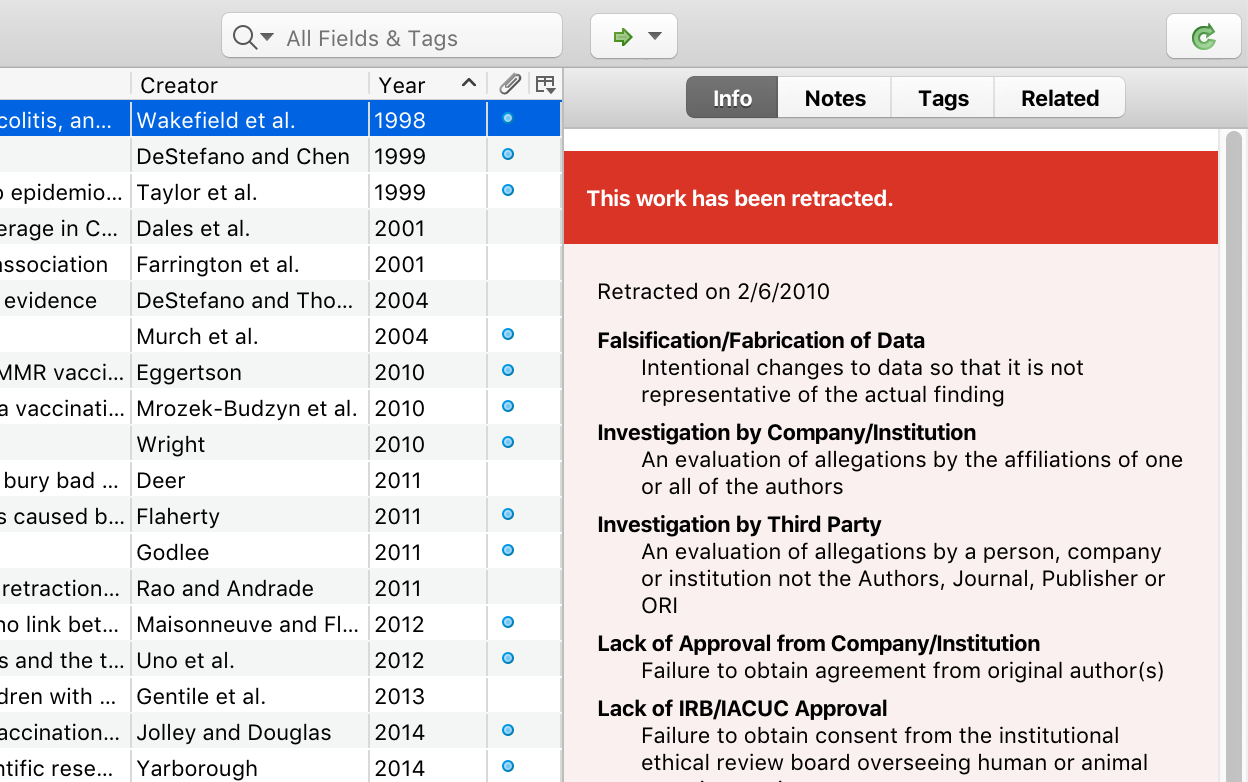
Retracted publications are flagged in the items list, and if you click on one you’ll see a warning at the top of the item pane with details on the retraction and links to additional information.
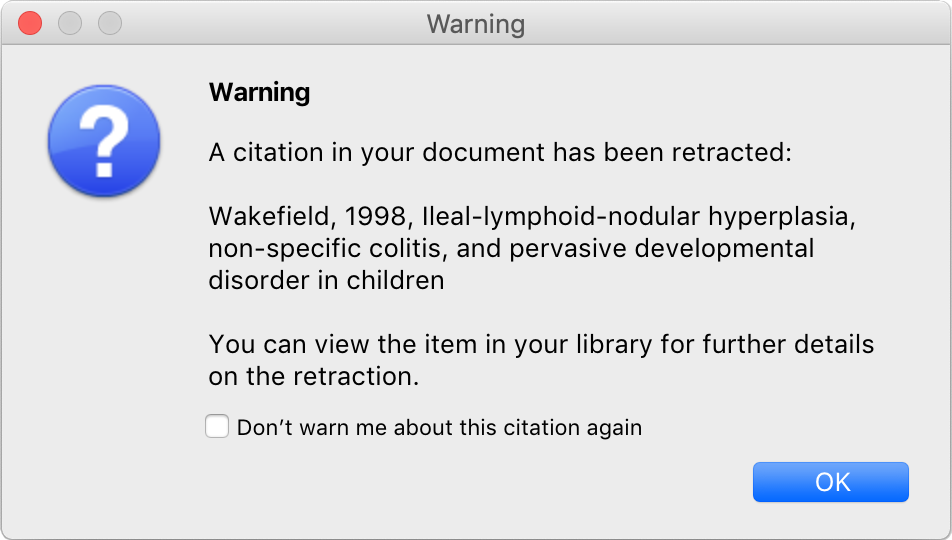
If you try to cite a retracted item using the word processor plugin, Zotero will warn you and confirm that you still want to cite it. If you’ve already added a citation to a document and it later is retracted, Zotero will warn you the next time you update the document’s citations, even if the item no longer exists in your Zotero library or was added by a co-author.
Currently, this feature is limited to items with a DOI or PMID (entered in the DOI field or in Extra as “DOI:”, “PMID:”, or “PubMed ID:”), which covers about 3/4 of Retraction Watch data, but we’re hoping to support items without identifiers as best as possible in a future update.
Via your web browser
To use Zotero properly, you need to install the Zotero Connector for Chrome, Firefox, or Safari, in addition to the Zotero desktop app. See Downloads.
The Zotero Connector’s save button is the most convenient and reliable way to add items with high-quality bibliographic metadata to your Zotero library. As you browse the web, the Zotero Connector will automatically find bibliographic information on webpages you visit and allow you to add it to Zotero with a single click.
For example, if you are reading a journal article online, the save button will change to the icon of a journal article (circled in red):

On a library catalog entry for a book, the save button will show a book icon:
Clicking the save button will create an item in Zotero with the information it has identified.
On many sites, Zotero will also save any PDF accessible from the page or an open-access PDF that can be found for the saved item.
Generic Webpages
Some webpages don’t provide any information that Zotero can recognize. On these pages, the save button will show a gray webpage icon. If you click the save button on these pages, Zotero will import the page as a “Web Page” item with a title, URL, and access date. See below.
Firefox:
Safari:
PDFs
If you are viewing a PDF file in your browser, the save button will show a PDF icon. Clicking this button will import the PDF file alone into your library and then automatically attempt to retrieve information about it. While this will often produce good results, it is usually better to use the save button from the publication’s abstract page or catalog entry, as described above.
If you save a PDF directly and Zotero isn’t able to retrieve metadata, it will leave the PDF as a standalone attachment. To add metadata, you’ll need to create a parent item, either by saving a regular bibliographic item as described above and dragging the PDF on top of it or by right-clicking on the PDF, choosing Create Parent Item, and entering an identifier such as a DOI or ISBN. If all else fails, you can click Manual Entry after selecting Create Parent Item and manually enter metadata for the item.
Multiple Results
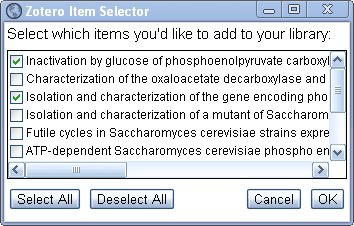
On some webpages that contain information about multiple items (e.g., a list of Google Scholar search results), the save button will show a folder icon. Clicking this folder icon will open a window where you can select the items that you want to save to Zotero:
Saving to a Specific Collection or Library
After you click the save button, a popup will appear indicating which Zotero collection the item is being saved to. If you want to save the item to a different collection or library, you can change the selection there, as well as enter tags to assign to the new item.
Data Quality and Choosing a Translator
The quality of the data Zotero imports is determined by the information supplied on the webpage. Some websites provide very high-quality data using a standard way to provide Zotero with data (via embedded metadata). Other websites provide only limited metadata (e.g., only the title of a blog post) or no metadata at all. For many sites, Zotero has website-specific “translators” to obtain the best quality metadata. Zotero recognizes almost all library catalogs, most news sites, research databases and scientific publishers. (For more information, see our compatible websites list.) By default, translator updates are automatically installed, independent of Zotero updates. Metadata for the same item may vary in quality across sites providing it. For example, importing an item from the publisher website will generally yield much better data than importing from Google Scholar.
Zotero will generally choose the best translator available for each site automatically. You can choose an alternative translator by right-clicking on the Zotero save button (click-and-hold in Safari) and choosing one of the supplied options. If a website isn’t importing properly, please report it on the Zotero Forums and provide the webpage URL.
New PDF features
Improved PDF metadata retrieval
While the “Save to Zotero” button in the Zotero Connector is the best way to save high-quality metadata and associated PDFs to Zotero, Zotero’s “Retrieve Metadata for PDF” feature provides an alternative when you already have a PDF and want to quickly add it to your Zotero library as a citable item.
Traditionally, “Retrieve Metadata for PDF” has been a manual operation that relied on Google Scholar for some files, and long-time Zotero users know that trying to retrieve metadata for many PDFs at once could result in Google temporarily blocking access, causing the feature to stop working.
Zotero 5.0.36 introduces a completely new PDF recognizer, using a Zotero-designed web service that doesn’t rely on Google Scholar and that allows large numbers of PDFs to be recognized without rate limits. The Zotero client will send the first few pages of a PDF to the web service, which uses a variety of extraction algorithms and known metadata from CrossRef, paired with DOI and ISBN lookups from the client as before, to build a parent item for the PDF. The Zotero lookup service doesn’t require a Zotero account and doesn’t log any data about the content or results of searches. No data is now sent to Google Scholar.
Using this new service, Zotero will now automatically attempt to retrieve metadata for PDFs you add, whether that’s via drag-and-drop, “Link to File…”/”Store Copy of File…”, or clicking the “Save to Zotero” button on a PDF in the browser. (In a browser, we still recommend saving from the article page when possible.)
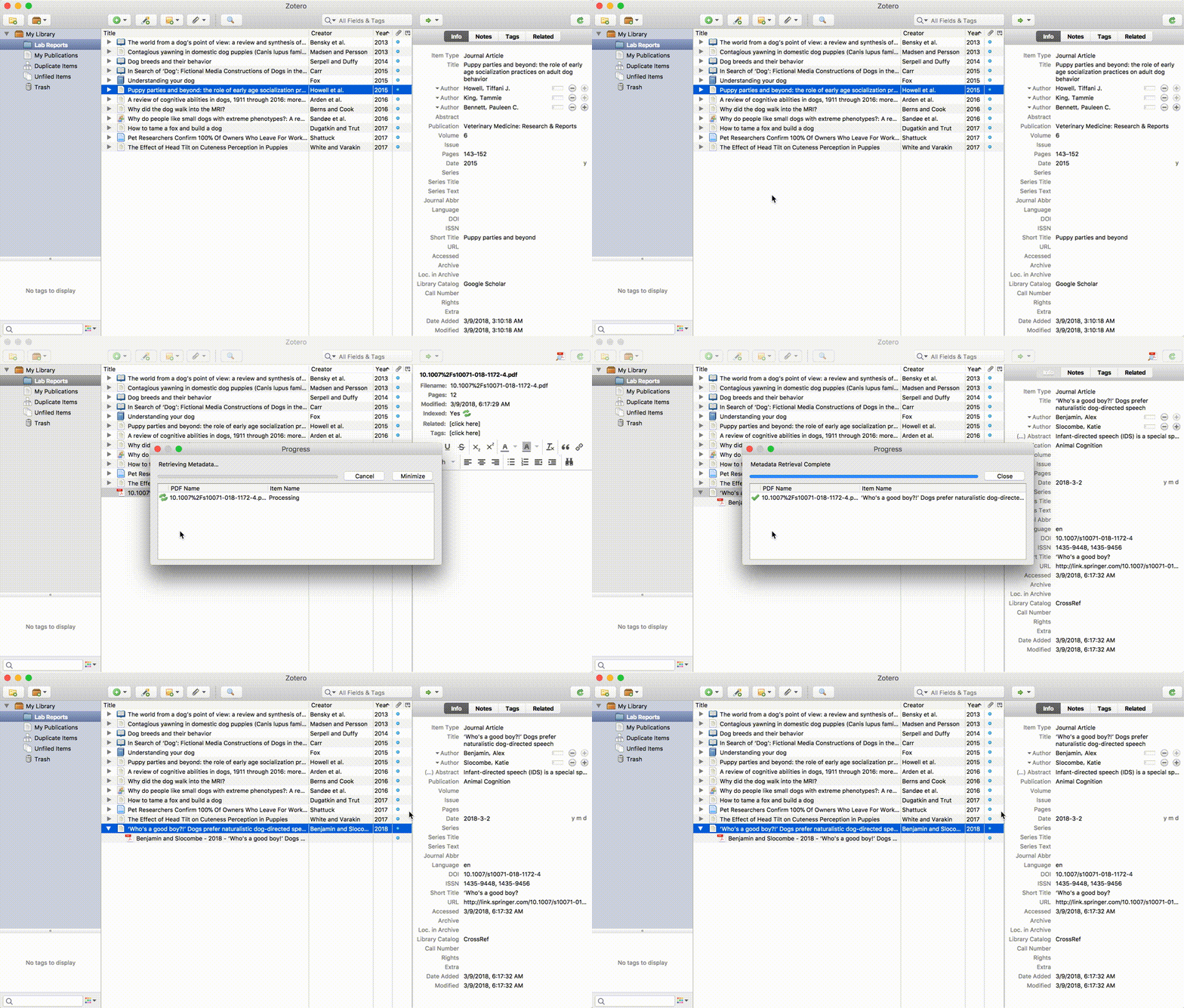
If you’re not happy with the results or want to add the parent item another way, you can right-click on the new parent item and select “Undo Retrieve Metadata”. There’s also a “Report Inaccurate Metadata” option to send the first few pages of the PDF and the retrieved metadata to Zotero developers for review.
You can disable automatic metadata retrieval in the General pane of the preferences.
Automatic renaming
When PDFs are added to existing Zotero items or metadata is retrieved for a PDF, Zotero will now automatically rename the file based on the parent metadata. This applies to both linked and stored files. A future version of Zotero will provide additional options for customizing the naming format.
You can disable automatic renaming from the General pane of the preferences. (Files saved along with items from web translators have always been automatically renamed and aren’t affected by this setting.)
Custom PDF viewer setting
Zotero opens PDFs using the system PDF viewer by default, but you can now choose a different PDF viewer to use for files from Zotero. This might come in handy if you’re happy with your system default for most PDFs but there’s a particular program you prefer to use for annotations (or if you’re just not sure how or are unable to change your system default).

Retracted item notifications with Retraction Watch integration
Posted June 14th, 2019 by Dan Stillman
Zotero can now help you avoid relying on retracted publications in your research by automatically checking your database and documents for works that have been retracted. We’re providing this service in partnership with Retraction Watch, which maintains the largest database of retractions available, and we’re proud to help sustain their important work.
How It Works
Retracted publications are flagged in the items list, and if you click on one you’ll see a warning at the top of the item pane with details on the retraction and links to additional information.
If you try to cite a retracted item using the word processor plugin, Zotero will warn you and confirm that you still want to cite it. If you’ve already added a citation to a document and it later is retracted, Zotero will warn you the next time you update the document’s citations, even if the item no longer exists in your Zotero library or was added by a co-author.
Currently, this feature is limited to items with a DOI or PMID (entered in the DOI field or in Extra as “DOI:”, “PMID:”, or “PubMed ID:”), which covers about 3/4 of Retraction Watch data, but we’re hoping to support items without identifiers as best as possible in a future update.
Designed for Privacy
The full retraction data is stored on Zotero servers, but we’ve designed this feature in a way that allows the Zotero client to check for retracted items without sharing the contents of your library. You don’t need to use Zotero syncing or upload a list of items to benefit from this feature.
This feature is available today in Zotero 5.0.67.
Archives
- July 2019
- June 2019
- November 2018
- October 2018
- May 2018
- March 2018
- November 2017
- July 2017
- April 2016
- March 2016
- September 2015
- June 2015
- May 2014
- April 2014
- October 2013
- May 2013
- April 2013
- November 2012
- September 2012
- April 2012
- January 2012
- September 2011
- August 2011
- July 2011
- June 2011
- April 2011
- March 2011
- February 2011
- January 2011
- October 2010
- September 2010
- August 2010
- May 2010
- April 2010
- March 2010
- January 2010
- December 2009
- October 2009
- June 2009
- May 2009
- April 2009
- March 2009
- February 2009
- January 2009
- December 2008
- November 2008
- October 2008
- September 2008
- August 2008
- July 2008
- June 2008
- May 2008
- April 2008
- March 2008
- February 2008
- January 2008
- December 2007
- November 2007
- October 2007
- September 2007
- August 2007
- July 2007
- June 2007
- May 2007
- April 2007
- March 2007
- February 2007
- January 2007
- December 2006
- November 2006
- October 2006
How It Works
Retracted publications are flagged in the items list, and if you click on one you’ll see a warning at the top of the item pane with details on the retraction and links to additional information.
If you try to cite a retracted item using the word processor plugin, Zotero will warn you and confirm that you still want to cite it. If you’ve already added a citation to a document and it later is retracted, Zotero will warn you the next time you update the document’s citations, even if the item no longer exists in your Zotero library or was added by a co-author.
Currently, this feature is limited to items with a DOI or PMID (entered in the DOI field or in Extra as “DOI:”, “PMID:”, or “PubMed ID:”), which covers about 3/4 of Retraction Watch data, but we’re hoping to support items without identifiers as best as possible in a future update.
Contenu du répertoire de données
Le fichier le plus important dans le répertoire de données est le fichier zotero.sqlite, qui contient la majorité de vos données : métadonnées des documents, notes, marqueurs, etc. Le répertoire contient également un sous-répertoire , contenant toutes vos pièces jointes, telles que les fichiers PDF, les captures de pages web, les fichiers audio ou tout autre fichier que vous avez importé (notez que les fichiers qui sont liés ne sont pas copiés dans ce sous-répertoire).
Votre répertoire ‘zotero’ contiendra probablement plusieurs autres fichiers. Il peut s’agir des fichiers zotero.sqlite.bak (sauvegarde automatique de zotero.sqlite mise à jour lorsque vous quittez Zotero et que le fichier zotero.sqlite.bak existant n’a pas été mis à jour dans les 12 dernières heures) et zotero.sqlite..bak (sauvegardes automatiques de zotero.sqlite créées durant certaines mises à jour de zeroero).
Attention : Avant de copier, supprimer ou déplacer l’un de ces fichiers, assurez-vous que Zotero est fermé. Ne pas le faire avant de déplacer les fichiers peut endommager vos données.
Disabling Automatic Requests
You can disable all automatic communication with Zotero servers from the Zotero and Zotero Connector preferences:
- Syncing: Sync preferences → leave unconfigured or disable automatic syncing
-
Automatic PDF metadata retrieval: General preferences → disable “Automatically retrieve metadata for PDFs”
We do not log any information about the contents of PDF metadata requests.
-
Open-access PDF retrieval: General preferences → disable “Automatically attach associated PDFs and other files when saving items”
If a PDF can’t be saved for an item with a DOI, Zotero will send the DOI to Zotero servers to check for open-access versions. We do not log the contents of these requests. Disabling this preference will disable all automatic attachment saving.
- Broken site translator reporting: disable “Report broken site translators” in the Advanced pane of Zotero and the Zotero Connector
- Translator/style update checking: Advanced preferences → disable “Automatically check for updated translators and styles”
-
Zotero update checking: Advanced preferences → Config Editor → set to false
Automatic update checking is strongly recommended for security and stability reasons.
-
Retracted item checking: Advanced preferences → Config Editor → set to false
Retraction checks are performed without sharing the items you have in your database.
-
Proxy authentication checking: Advanced → Config Editor → set to false.
At Zotero startup, HEAD requests are made to a test file on Amazon S3 and selected publisher websites (controlled by extensions.zotero.proxyAuthenticationURLs) to trigger a proxy authentication prompt if and only if Zotero detects that a proxy is required to connect to the internet. If you disable this option and require an authenticated proxy, Zotero network connections will fail.
If automatic syncing or automatic translator/style updates are enabled, Zotero will maintain a persistent connection to Zotero servers when it is open in order to provide immediate updates. You can disable this connection by disabling both of those options or by setting to false in the Config Editor.
If you use the Zotero Connector without having Zotero open, the Connector will make a daily request to Zotero servers for information on available site translators. It will then download translators for the sites you visit. For example, if you load a New York Times article, the Connector will download Zotero’s New York Times translator and cache it. If Zotero doesn’t have a translator for a specific site, no request will be made. No information on the specific pages you visit is transmitted, and subsequent requests won’t be made for the same translator until you restart your browser or the translator is updated. You can avoid these requests by keeping Zotero open while you browse the web.
Editing Items
When you have selected an item in the center pane, you can view and edit its bibliographic information via the Info tab of the right-hand pane. Most fields can be clicked and edited. Changes are saved automatically as they are made. Some fields have special features, which are discussed below.
Names
Each item can have zero or more creators, of different types, such as authors, editors, etc. To change the creator type, click the creator field label (e.g., ). A creator can be deleted by clicking the minus button at the end of the creator field, and additional creator fields can be added by clicking the plus button at the end of the last creator field. Creators can be reordered by clicking a creator field label and selecting “Move Up” or “Move Down”.
Each name field can be toggled between single and two field mode by clicking the “Switch to single field” / “Switch to two fields” buttons at the end of the creator field. Single field mode should be used to institutions (e.g., when the author is “Company A”), while two field mode (last name, first name) should be used for personal names. If a person has only one name (e.g., “Socrates”), enter this as a Last Name in two field mode. You can switch the order of two field author names by right-clicking on the name and choosing “Swap First/Last Names”
To quickly enter additional creators, type Shift-Enter/Retun to move immediately to a new creator field.
Journal Abbreviations
Journal articles are often cited with the abbreviated journal title. Zotero stores the journal title and journal title abbreviation in separate fields (“Publication” and “Journal Abbr”, respectively). While some citation styles require different abbreviations, most of the variation is in whether or not the abbreviation contain periods (e.g., “PLoS Biol” or “PLoS Biol.”). Because removing periods is more accurate than adding them, we recommend that you store title abbreviations in your Zotero library with periods. Zotero can then reliably strip out the periods in rendered bibliographies when the chosen citation style calls for it.
Titles
To help with changing the case of titles, the title fields (e.g., “Title”, “Publication”, “Series Title”, “Short Title” for the “Journal Article” item type) can be right-clicked. This shows the “Transform Text” menu, with options to convert the title to either “Title Case” or “Sentence case”. Zotero does not recognize proper nouns, and transformed titles should always be checked for capitalization errors.
Clicking the label of the URL (“URL:”) and DOI (“DOI:”) fields will open up the (DOI-resolved) URL in your web browser.
Extra
The Extra field can be used for storing custom item metadata or data that doesn’t have a dedicated field in Zotero. If you need to cite an item using a field not supplied by Zotero, you can also store such data in Extra. See for more details on how to cite these fields. For example, to add a DOI to a Book Section item, add this to the top of Extra:
یکپارچگی با وبگاهها
WordPress
-
, ساخته Katie Seaborn.
افزونه ای برای نمایش دادن مراجع زوترو در ورد پرس (به همراه یک آیکون زوتروی اختیاری برای وبگاه)
-
COinS Metadata Exposer, ساخته Zotero.
افزونه ایست که امکان وارد کردن برچسبهای COinS را داخل هر پست وبلاگ در ورد پرس فراهم می کند و باعث می شود تا نرم افزار زوترو بتواند ابرداده های موجود در وبگاه (مانند عنوان مطلب، پدید آورنده، تاریخ، عنوان وبلاگ، دسته و نشانی اینترنتی) را تشخیص دهد.
-
, ساخته CHNM.
افزونه ایست که امکان وارد کردن برچسبهای COinS را داخل هر پست وبلاگ در ورد پرس فراهم می کند و باعث می شود تا نرم افزار زوترو بتواند ابرداده های موجود در وبگاه (مانند عنوان مطلب، پدید آورنده، تاریخ، عنوان وبلاگ، دسته و نشانی اینترنتی) را تشخیص دهد.
-
, ساخته Peter Binkley.
افزونه ای برای ورد پرس که امکان درج برچسب COinS را برای چیزهایی به جز پستهای وبلاگ (مانند مقاله مجله یا کتاب) فراهم می کند. این برچسبها را می توان از طریق پنجره ویرایش پستهای وبلاگ تعریف نمود.
-
, ساخته John Miedema.
یک افزونه ورد پرس برای نمایش جلد یک کتاب، عنوان، نویسنده، ناشر و سایر اطلاعات کتاب شناسی آن در وبگاه شما. این افزونه اطلاعات خود را از Open Library می گیرد.
-
, ساخته Mike Giarlo and Peter Binkley.
یک افزونه برای به معرض نمایش گذاشتن ابرداده های وبلاگ از طریق unAPI.
SPIP
-
, ساخته Joseph Larmarange.
یک افزونه برای بههنگامسازی کتابخانه زوترو با سامانه مدیریت محتوای SPIP. به کمک این افزونه می توان مراجع را در یک وبگاه نمایش داد. با استفاده از یک افزونه کمکی (به نام BiblioCheck) پژوهشگران می توانند اطلاعات کتاب شناسی را از طریق وب تصحیح کنند. (زبان افزونه PHP است.)
BibBase
-
.
به کمک این افزونه میتوانید اقلام هر کتابخانه، مجموعه یا گروه زوترو را بر روی هر وبگاه دلخواه نمایش دهید. مثلاً میتوانید بر روی وبگاه شخصی خود یک صفحۀ تألیفات داشته باشید. برای مشاهدۀ چند مثال اینجا. را ببینید
عمومی
-
, ساخته David Reitter.
یک صفحه وب حاوی اطلاعاتی کتاب شناسی بر مبنای یک یا چند مجموعه اطلاعاتی مشخص از زوترو تولید میکند. محتوای تولید شده ثابت است و برای تغییر آن باید هر از چندی این افزونه را دوباره اجرا کنید.
Instructions for local development
- Clone the repo
- to get any dependencies
- will generate a folder for you. You should see an file in this directory. If you open it, find the tag and make note of the value.
- Make sure Zotero is closed
- In terminal, navigate to your Zotero profile directory
| Operating System | Location |
|---|---|
| Mac | /Users//Library/Application Support/Zotero/Profiles/ |
| Windows 10/8/7/Vista | C:\Users<User Name>\AppData\Roaming\Zotero\Zotero\Profiles<randomstring> |
| Windows XP/2000 | C:\Documents and Settings<username>\Application Data\Zotero\Zotero\Profiles<randomstring> |
| Linux | ~/.zotero/zotero/ |
- Next, go into and create a text file matching the value you saw in the tag. e.g. a file called
- Open this file, and in it, set the contents to be the absolute path to the file from your directory
- back to the profile directory (one level above )
- Open the file
- Comment out the lines containing and . Should only be needed once.
- Open Zotero, and you should see the extension get loaded
Notes:
- Doing will also generate an directory locally that you can directly add as a plugin into your Zotero
- It looks like Zotero has been migrating to Electron (or at least there may be plans for this; it’s been discussed for the past 4 years). Due to the lack of support for XUL, clear plugin documentation, and the potential deprecation of this version of Zotero, a lot of this codebase was put together by looking at existing plugins that worked in similar ways. If you’re trying to write a plugin, I’d recommend poking around these three excellent plugins:
- https://github.com/PubPeerFoundation/pubpeer_zotero_plugin
- https://github.com/jlegewie/zotfile
- https://github.com/bwiernik/zotero-shortdoi
Windows
Could not create Java implementation loader
Upon manual installation of the LibreOffice component, you may see the message
“Could not create Java implementation loader”
This error reflects a faulty Java installation within LibreOffice. This issue affects not only Zotero, but any LibreOffice extension that uses Java. Follow the steps below, testing whether manual installation succeeds after each.
- Check that LibreOffice is up to date, as new Java releases sometimes introduce incompatibilities with LibreOffice.
- Make sure that Java is installed and enabled in LibreOffice. Choose Tools → Options → LibreOffice → Java (or Advanced). Ensure that “Use a Java runtime environment” is checked, and that a JRE appears in the list below. (It may take a few seconds to load.)
- Remove the Zotero LibreOffice Integration component from Tools → Extension Manager and uninstall and reinstall LibreOffice.
Locating Your Zotero Data
The easiest and most reliable way to find your Zotero data is by clicking the “Show Data Directory” button in the Advanced tab of your Zotero Preferences window. This will reveal the folder on your computer that contains your Zotero database and attachment files.
Zotero 5
Unless you have selected a custom data directory in the Advanced pane of the Zotero preferences, your Zotero data is stored within the following OS-dependent directories:
| macOS |
/Users/<username>/Zotero |
| Windows 7 and higher |
C:\Users\<User Name>\Zotero |
| Windows XP/2000 |
C:\Documents and Settings\<username>\Zotero |
| Linux |
~/Zotero |
Zotero 4 for Firefox (2017 and earlier)
| macOS |
/Users/<username>/Library/Application Support/Firefox/Profiles/<randomstring>/zotero Note: The /Users/<username>/Library folder is hidden by default. To access it, click on your desktop, hold down the Option key, and click the Finder’s Go menu, and then select Library from the menu. |
| Windows 7 and higher |
C:\Users\<User Name>\AppData\Roaming\Mozilla\Firefox\Profiles\<randomstring>\zotero |
| Windows XP/2000 |
C:\Documents and Settings\<username>\Application Data\Mozilla\Firefox\Profiles\<randomstring>\zotero |
| Linux (most distributions) |
~/.mozilla/firefox/Profiles/<randomstring>/zotero |
Zotero 4 Standalone (2017 and earlier)
| macOS |
/Users/<username>/Library/Application Support/Zotero/Profiles/<randomstring>/zotero Note: The /Users/<username>/Library folder is hidden by default. To access it, click on your desktop, hold down the Option key, and click the Finder’s Go menu, and then select Library from the menu. |
| Windows 7 and higher |
C:\Users\<User Name>\AppData\Roaming\Zotero\Zotero\Profiles\<randomstring>\zotero |
| Windows XP/2000 |
C:\Documents and Settings\<username>\Application Data\Zotero\Profiles\<randomstring>\zotero |
| Linux (most distributions) |
~/.zotero/Profiles/<randomstring>/zotero |
The “Show Data Directory” button will always reveal the data directory currently in use and is the recommended method for finding your data directory. If you’re unable to access the Zotero preferences, a search for the file name ‘zotero.sqlite’ can also help you locate the Zotero data directory.
Interact With Groups Through the Zotero Client
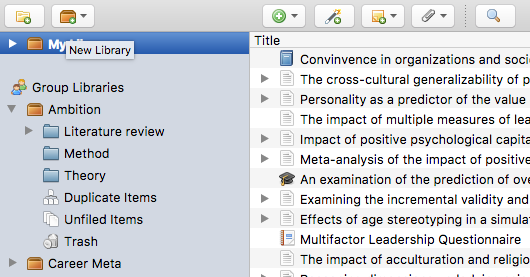
If you have and are a member of a group with an enabled library, the group library will appear in Zotero’s left pane. Items can be dragged into a group from My Library or another group and viewed or edited by other group members, if their permissions allow it. To create a collection, right-click on a group library and select “New Collection…” or “New Saved Search…”.
Note that group libraries are wholly separate from My Library. Any items dragged into them are separate copies and changes to the items will not be reflected in your own copy of the item until you drag it back into My Library.
Below, you can see an image of several groups with collections.
Free and Open Source
As an open-source tool, Zotero is free in two senses of the word: you don’t need to pay to use it, and you’re free to make changes to its code to make it do what you want. The benefits of the first one are obvious, but the second is critical for a program you’re entrusting with your research data. Zotero has always guaranteed users complete access to their own data, but open source means you don’t need to take our word for it. If the organization that runs Zotero disappeared tomorrow, or if we made a decision that didn’t put users’ interests first, others would be free to take Zotero’s source code and continue to maintain and improve it.3
As part of the broader open-source community, we’re committed to supporting open software and open standards. We helped create the Citation Style Language now used in most reference software, and we’re currently contributing to the Joint Roadmap for Open Science Tools. A tool we built is used by Wikipedia editors to cite sources using Zotero’s powerful web-saving abilities. All the software we create is freely available for others to use and modify.4
Zotero
Расширение для вашего браузера
Скачать ZoteroСкачать Zotero(Google Chrome)
Zotero делает цитирование источников и организацию ваших документов проще и удобнее. Сохранить URL-адреса, конвертировать текстовые файлы, настроить форматы ссылок бесплатно всего за несколько кликов.
Собирать, организовывать и цитировать
Просто загрузите Zotero как расширение для вашего браузера и найдите кнопку копирования на панели инструментов.
Нажмите эту кнопку и сохраните адрес веб-страницы, на которой вы сейчас находитесь, в базе данных Zotero. Затем перетащите эти сохраненные URL в ваш документ, и они станут цитируемыми. Отрегулируйте ссылку на подходящую для вашей работы. Zotero поддерживает практически все форматы цитирования, такие как Harvard, APA и MLA.
Zotero также поставляется как самостоятельное приложение. Вы можете скачать его на свой рабочий стол и работать в автономном режиме.
Приложение имеет интеграцию с текстовым процессором для всех распространенных платформ, таких как Microsoft Word и Google Docs. Это означает, что вы можете объединять файлы из любой из этих программ, используя Zotero. Вы можете написать прямо на Zotero, если хотите, и сохранить свою работу в любом текстовом формате.
Zotero собирает и организует для вас все цитаты и публикации. Вы создаете определенную тему, и приложение автоматически создает папку для нее. Любые источники, которые вы сохраняете для этого предмета, классифицируются и помещаются в это место. Вы можете получить доступ и редактировать в любое время в вашей библиотеке Zotero.
Простой интерфейс делает Zotero совместимым с пользователями любого уровня квалификации. Вы можете попробовать другие расширенные функции, такие как улучшение BibTex и синхронизация данных.
Есть ли лучшая альтернатива?
Нет. Zotero предлагает писателям и издателям высочайший уровень организации и удобства. Подобные приложения включают Endnote, который также автоматически цитирует вас, если вы поступили в университет, который его предоставляет.
Zotero значительно снижает нагрузку на любого писателя. С помощью этого приложения вы можете перестать беспокоиться о поиске справочных инструкций.
Child versus Standalone Attachment Files
Files can be added either as standalone items or as child items to regular Zotero bibliographic metadata items. It is generally always a good idea to work with files as child items. Standalone files cannot be used with many of Zotero’s features, including citing, My Publications, and most types of searching, because they lack bibliographic metadata.
If you save a PDF directly to your library, Zotero will attempt to retrieve metadata for it and create a parent item automatically. If the item can’t be recognized, you’ll be left with a standalone attachment. You can add a parent by either saving an item from the web and dragging the PDF on top of it (if a PDF isn’t attached automatically) or by right-clicking on the PDF, choosing Create Parent Item, and entering an identifier such as a DOI or ISBN. If all else fails, you can click Manual Entry after selecting Create Parent Item and manually enter metadata for the item.
Unparalleled Support
The software you rely on for your research needs to work. When you have a Zotero question, you can often get a response directly from a Zotero developer or expert community member within minutes. We don’t have customer support representatives — Zotero developers are directly accountable for the software they create, and if you use Zotero for a while there’s a good chance you’ll know some of us by name.
Other reference managers make you go through customer support representatives who aren’t involved in the development of the software and whose communications are often limited to generic Twitter responses.
See How Zotero Support Works for more information.
Developer Tools
Zotero Client and Plugins
-
Hello World, by Zotero.
Sample Zotero plugin.
-
Scaffold, by Zotero, Avram Lyon, and Rintze Zelle.
Zotero plugin for translator development.
-
, by Emiliano Heyns.
A Yeoman generator to create a typescript-based plugin scaffold. Includes build scripts and a Travis workflow to publish updatable XPIs as GitHub releases.
CSL Citation Styles
-
Zotero CSL Style Editor, by Zotero.
- Zotero comes with a basic editor for installed CSL styles.
- Shows previews of citations and bibliographies for selected items from your Zotero library.
- Access from the Tools menu in Zotero.
-
, by Rintze M. Zelle.
Validate edited CSL styles to ensure they are valid CSL.
-
, by Frank Bennett.
- A powerful and convenient tool for on-the-fly automatic testing and validation of CSL styles with any editor.
Stored Files and Linked Files
Files can be added to your Zotero library as either stored files or linked files.
Stored Files
Stored files, which are the default, are stored within the Zotero data directory, and Zotero will automatically manage them, including deleting them if you delete the attachment item in Zotero. If you use file syncing, Zotero will automatically sync stored files between devices and make them available in your online library on zotero.org. If you add a stored file from a file on your computer, the file is copied to the Zotero data directory, so you may wish to delete the original to avoid confusion.
When using Zotero file syncing, you can choose to download stored files only as needed, avoiding the need to download all files to every device. An upcoming version of Zotero will allow you to choose how long to keep synced files on a given computer in order to limit disk space usage, temporarily redownloading files when you need them.
We generally recommend using stored files for the most seamless experience.
Linked Files
If you sync linked files using an external tool (Dropbox, etc.) for use on multiple computers, it is a good idea to set the so that the files can be found by Zotero on each computer even if the containing folder is at a different location in the filesystem.
If you wish to convert linked files to stored files in order to allow Zotero to manage them, you can do so from the Tools → Manage Attachments menu.